
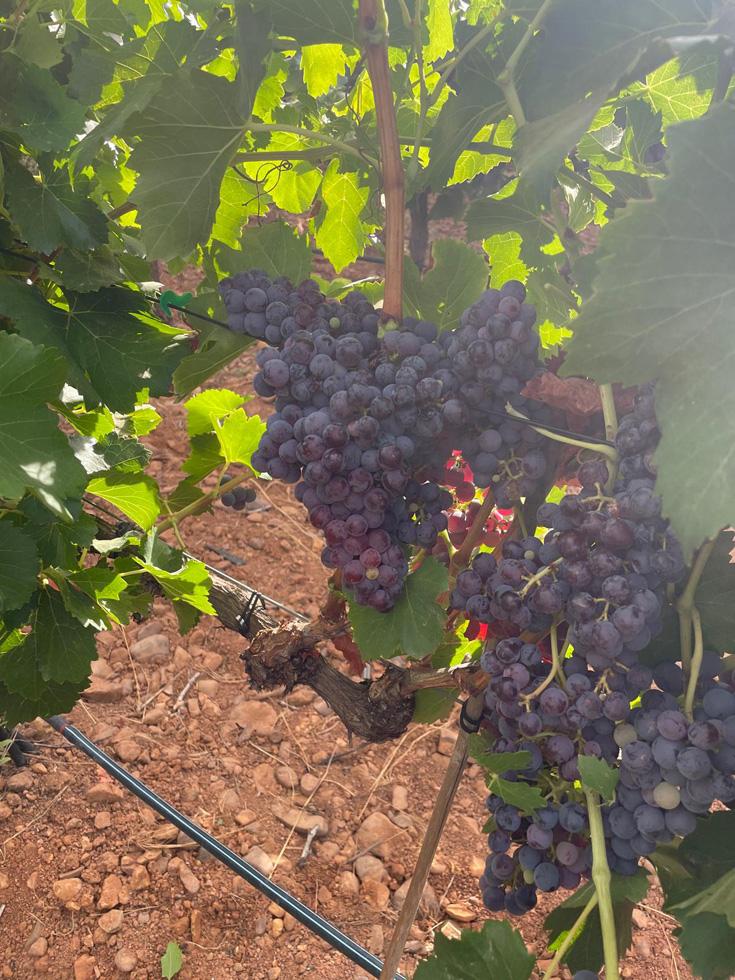
Grenache Noir
Black grape variety
Origin
This variety, of Spanish origin, was introduced to France in the Middle Ages.
Synonyms
In the European Union, Grenache is officially known by other names: Alicante (Italy), Cannonau (Italy), Tocai rosso (Italy), Garnacha Tinta (Spain), Grenache noir (Bulgaria, Cyprus, Croatia), Grenache rouge (Greece).
Phenology
- Budburst period: 6 days after the Chasselas variety.
- Ripening period: 3rd period, 4 weeks after the Chasselas variety.
Technological potential
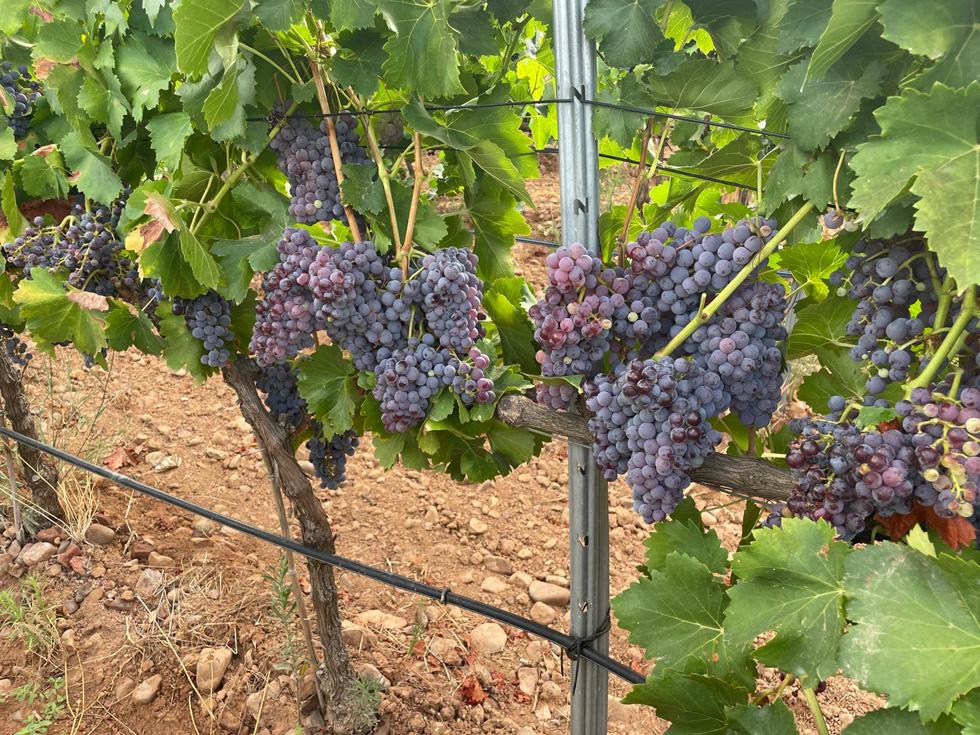
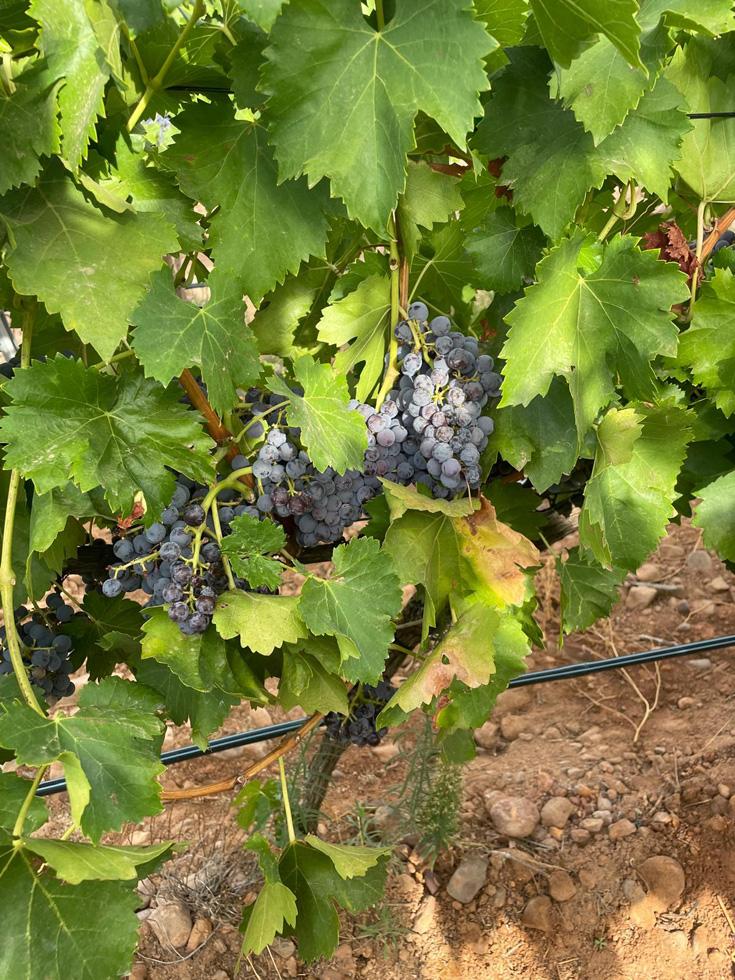
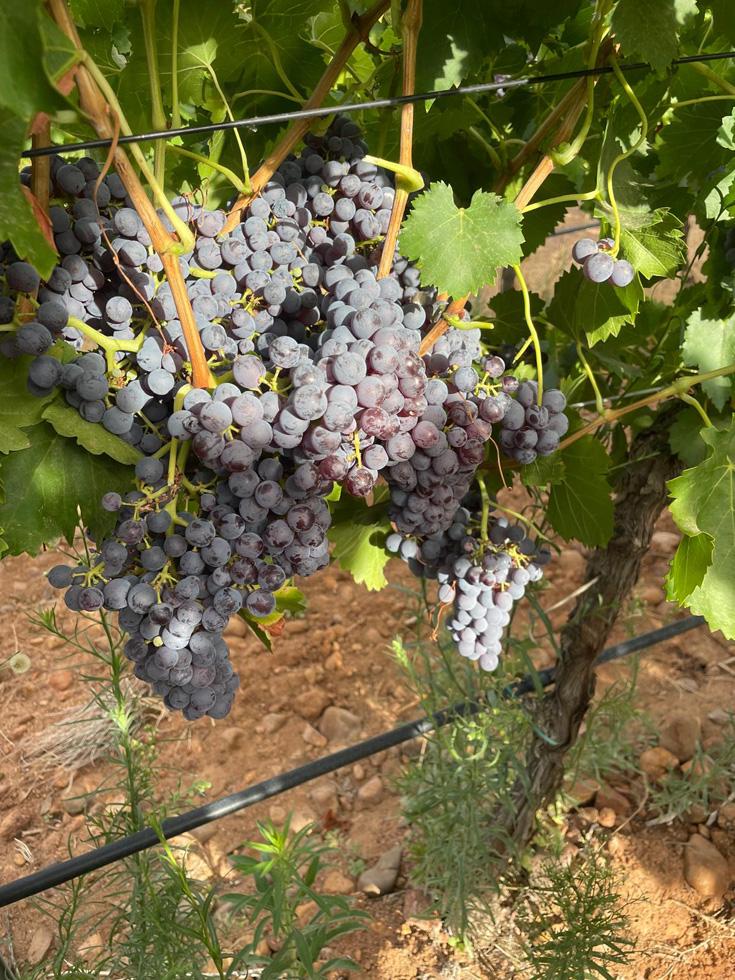
Grenache clusters are medium to large, and the berries are medium-sized. This variety has a very high sugar accumulation potential, but it can decrease rapidly if yields are increased. Acidity is generally low. Grenache can produce natural sweet wines and great aged wines, structured, full-bodied, and aromatic, provided it is planted in quality soils and its yield is perfectly controlled.
Agronomic characteristics
- This very vigorous variety, with strong vines, may occasionally exhibit
coulure issues, especially depending on climatic conditions and the
rootstock used. - It has an upright growth habit and should be trained with short pruning (goblet or cordon).
- It easily exhibits symptoms of magnesium deficiency.
- It is better adapted to slightly acidic, gravelly, and stony soils (pebbles) than to very calcareous white soils.
If you are interested in a specific clone or rootstock
Request a quote
"*" indicates required fields