


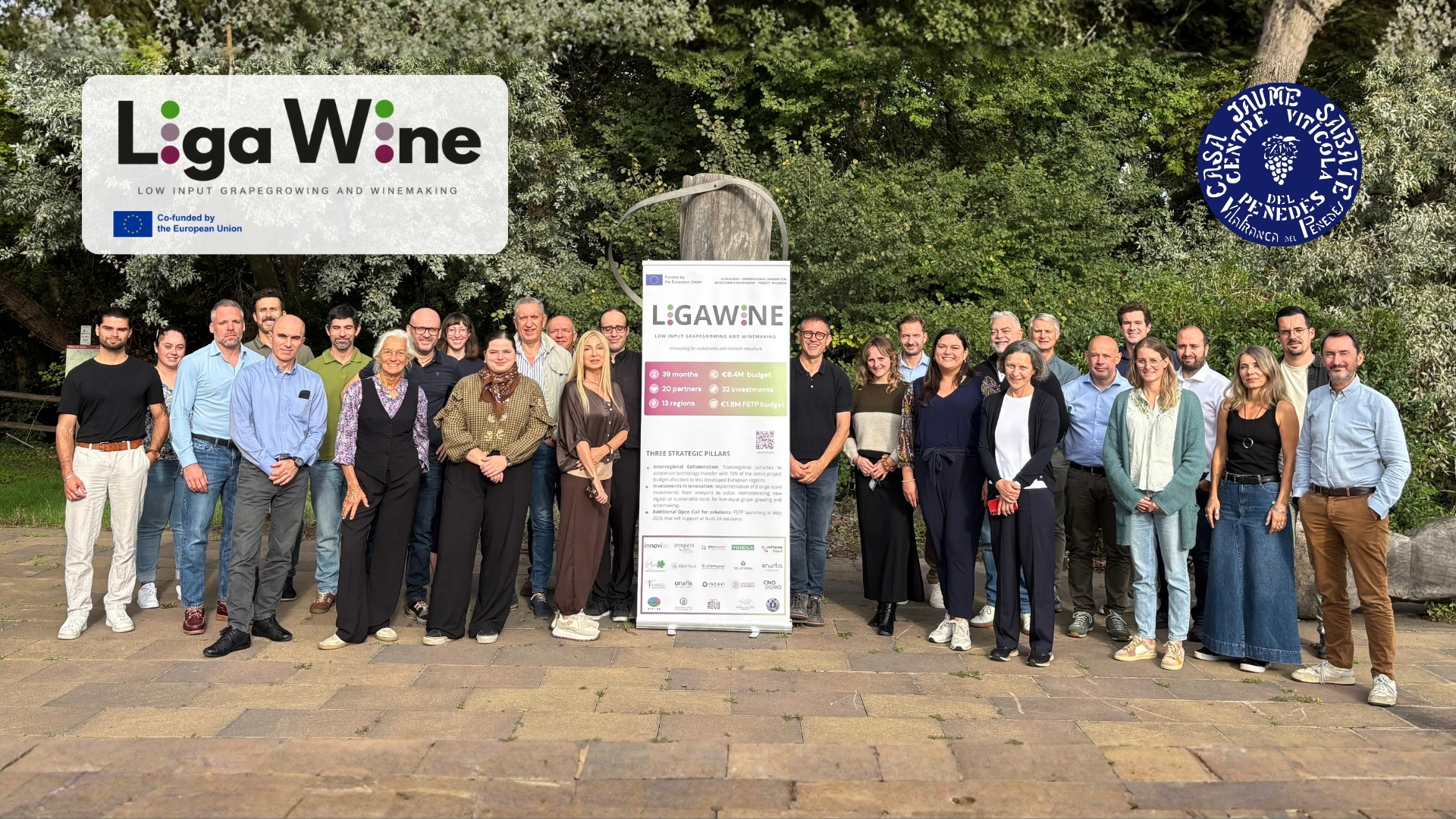
On October 14 and 15, the partners of the European project LIGAWINE met in Vilafranca del Penedès to hold the consortium’s second in-person meeting.
Two days of work, exchange, and direct contact among the different organizations participating in the project, with the aim of reviewing progress made so far, sharing different work streams, and continuing to define the next steps.
Reviewing the Project and Sharing Progress
The first day focused on monitoring LIGAWINE.
During the different sessions, the project’s tasks, milestones, and indicators were reviewed, as well as the progress of the working groups and pilot activities currently underway.
These in-person meetings allow for sharing the results of each work stream, coordinating different actions, and pooling the experiences of partners participating in the project from very diverse realities and fields.
The day also provided an opportunity to learn about one of Vilafranca del Penedès’ most representative traditions with a visit to the headquarters of the Castellers de Vilafranca.
From the Project to the Challenges of the Wine Sector
The second day continued with the Open Forum “Wine Industry Insights: From Challenges to Collaboration”, a session open to sector representatives, regional authorities, and other European stakeholders, both in-person and online.
During the day, LIGAWINE was presented, and the collaboration between European regions, smart specialization priorities, and the main challenges currently facing the wine sector were explored in depth.
The results of a survey on these challenges were also shared, and different organizations from France, Greece, Italy, Portugal, and Spain contributed their perspectives.
The objective was to connect the real needs of the sector with the priorities of the different regions and to continue opening new avenues for cooperation between territories.
Learning Other Ways of Working
The meeting concluded with a visit to Familia Torres, where participants were able to learn firsthand about the regenerative viticulture practices they implement at the Mas La Plana estate.
The visit also included the Waltraud winery and the micro-vinification room, offering a new opportunity to share knowledge and observe different approaches to current challenges in viticulture and winemaking on site.
For ENRIC REGULL, being part of these meetings allows us to continue contributing our expertise in viticultural plant material, nursery, and field, while sharing knowledge with companies, research centers, and professionals from different European regions.
LIGAWINE continues to advance through this combination of research, practical experience, and collaboration among the different actors in the sector.
Want to know more about LIGAWINE and ENRIC REGULL’s role within the project?
Discover our articles about the project on the blog.