
Merlot
Black grape variety
Origin
This variety originates from the Bordeaux vineyards. According to genetic analysis, Merlot is believed to be the result of a cross between Cabernet franc and Magdeleine Noire des Charentes.
Synonyms
There are no officially recognized synonyms in France or other European Union countries.
Phenology
- Budburst period: 2 days after the Chasselas variety.
- Ripening period: 2nd period, 2 and a half weeks after the Chasselas variety.
Technological potential
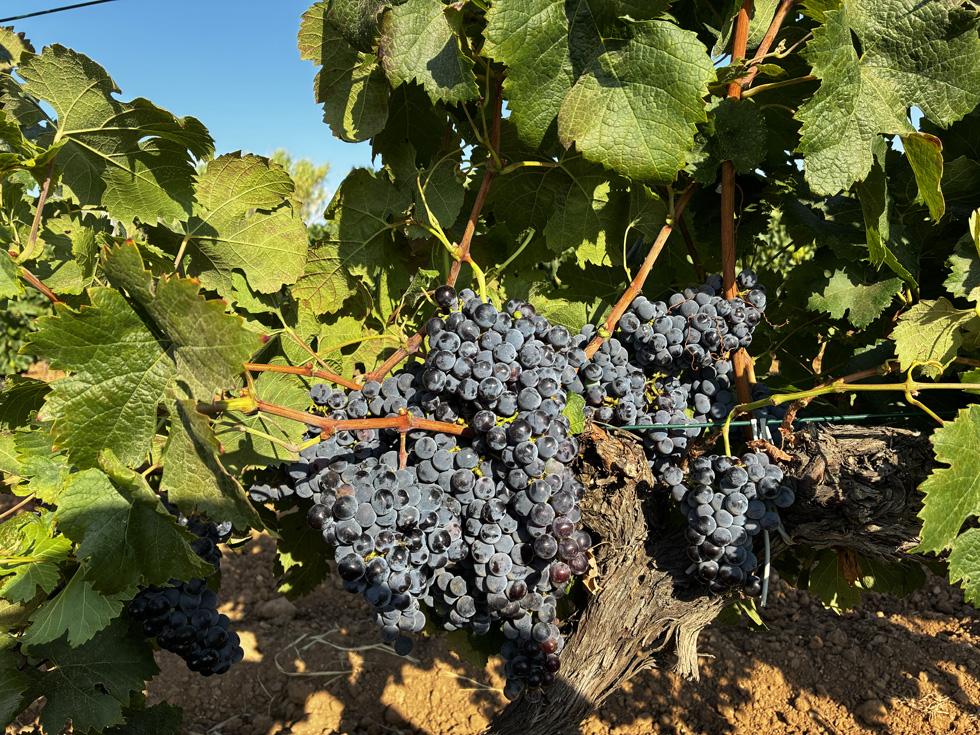
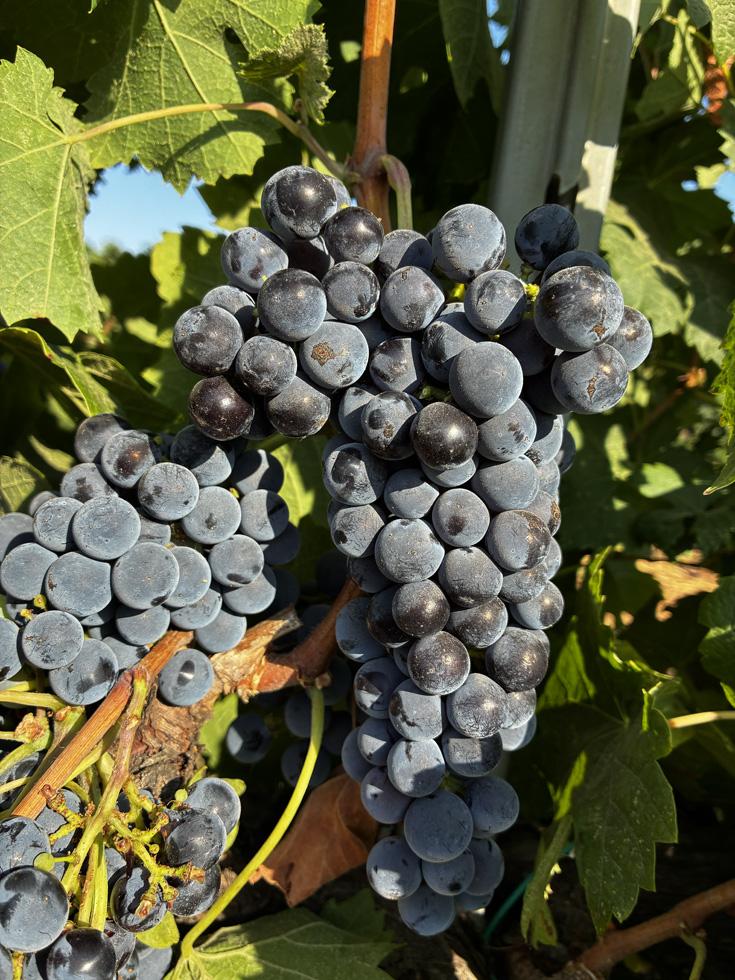
The clusters are small to medium-sized and winged, while the berries are medium-sized. Merlot produces well-rounded, powerful wines with high alcohol content, intense color, and low acidity. These robust and structured wines, which feature relatively soft tannins, are suitable for wood aging. The aromas are complex and elegant.
Agronomic characteristics
- Merlot is a variety of moderate to high vigor, with a tendency to produce many suckers and water sprouts from the rootstock.
- Its semi-erect or horizontal growth habit requires an adequate trellising system.
- Its fertility is optimal, and short pruning is recommended.
- Under certain climatic conditions, coulure may occur.
- Merlot adapts well to clay-limestone soils.
- Furthermore, it is quite sensitive to winter and spring frosts (early bud break) and does not tolerate intense drought conditions well.
If you are interested in a specific clone or rootstock
Request a quote
"*" indicates required fields