
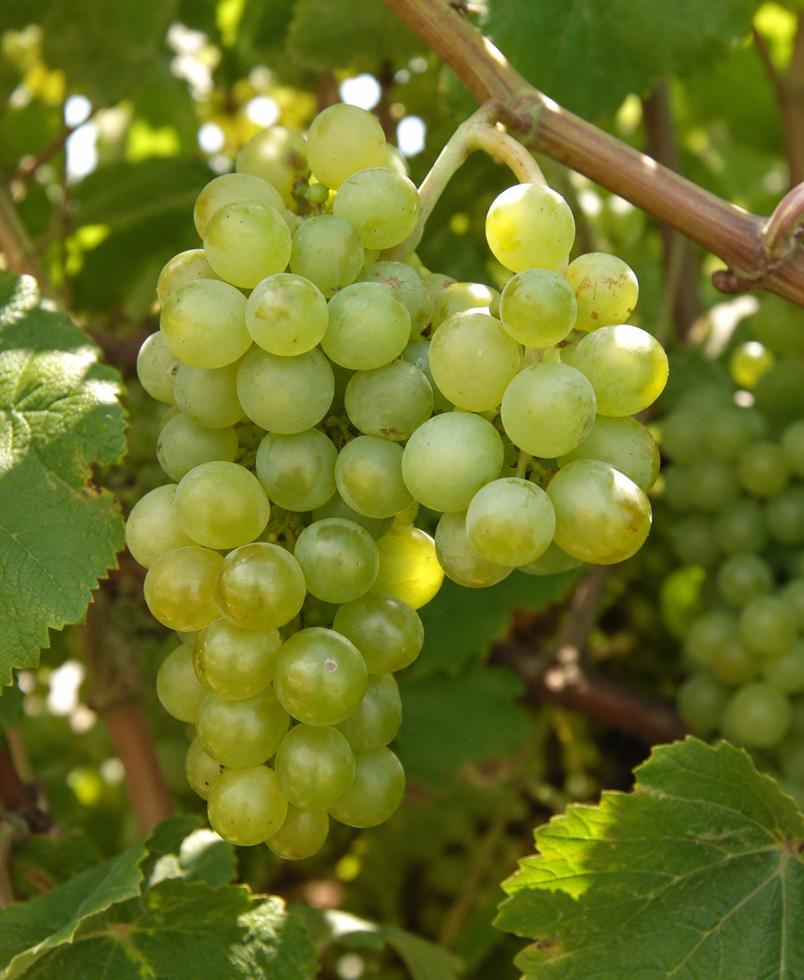
Verdejo
White grape variety
Origin
This variety originates from Spain, likely from the region of Castile and León. According to genetic analyses conducted in Montpellier, Verdejo is the result of a cross between Savagnin and Castellana Blanca.
Synonyms
«Verdejo blanco».
Phenology
- Budbreak period: 5 days after the Chasselas variety.
- Ripening period: 1st period, 1.5 to 2 weeks after the Chasselas variety.
Technological potential
Verdejo grape bunches are medium-sized and compact. The berries are also medium, with a simple flavor, thick skin, a significant presence of bloom, and juicy pulp. They maintain good acidity during ripening. The musts and wines of this variety are relatively susceptible to oxidation.
Verdejo's varietal aromas are distinct: apple, pear, citrus, bitter almond, aniseed notes, and freshly cut grass. The white wines are aromatic, fresh, lively, vigorous, balanced, rounded, and suitable for aging. Verdejo also produces high-quality wines. In case of insufficient ripening, the wines may exhibit a herbaceous flavor.
Agronomic characteristics
- The Verdejo variety exhibits a semi-erect to erect growth habit. It adapts well to dry climates.
- In fertile conditions, excessive vigor can lead to a risk of coulure.
- This variety is sensitive to wind.
- Its early budbreak makes it susceptible to spring frosts.
- Preference should be given to moderate long pruning, such as Guyot.
If you are interested in a specific clone or rootstock
Request a quote
"*" indicates required fields