
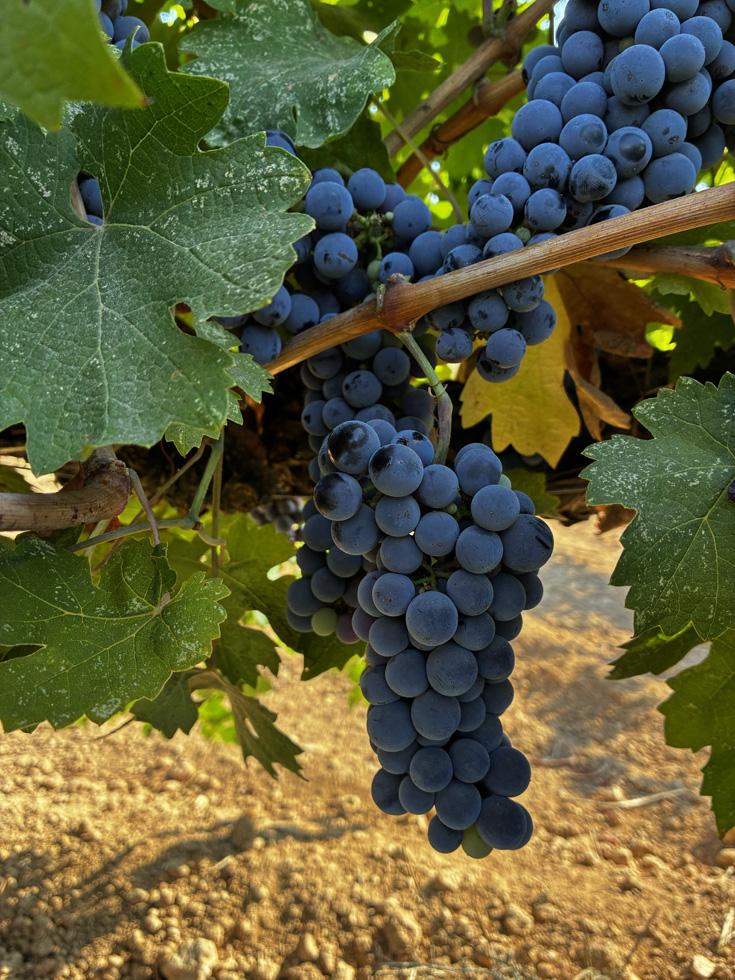
Cabernet Sauvignon
Black grape variety
Origin
This variety, originating from the Bordeaux region, is believed to be a cross between Cabernet Franc and Sauvignon, according to published genetic analyses.
Synonyms
There are no officially recognized synonyms in France or other European Union countries.
Phenology
- Bud-burst period: 13 days after the Chasselas variety.
- Ripening period: 2nd period, 3 to 3.5 weeks after the Chasselas variety.
Technological potential
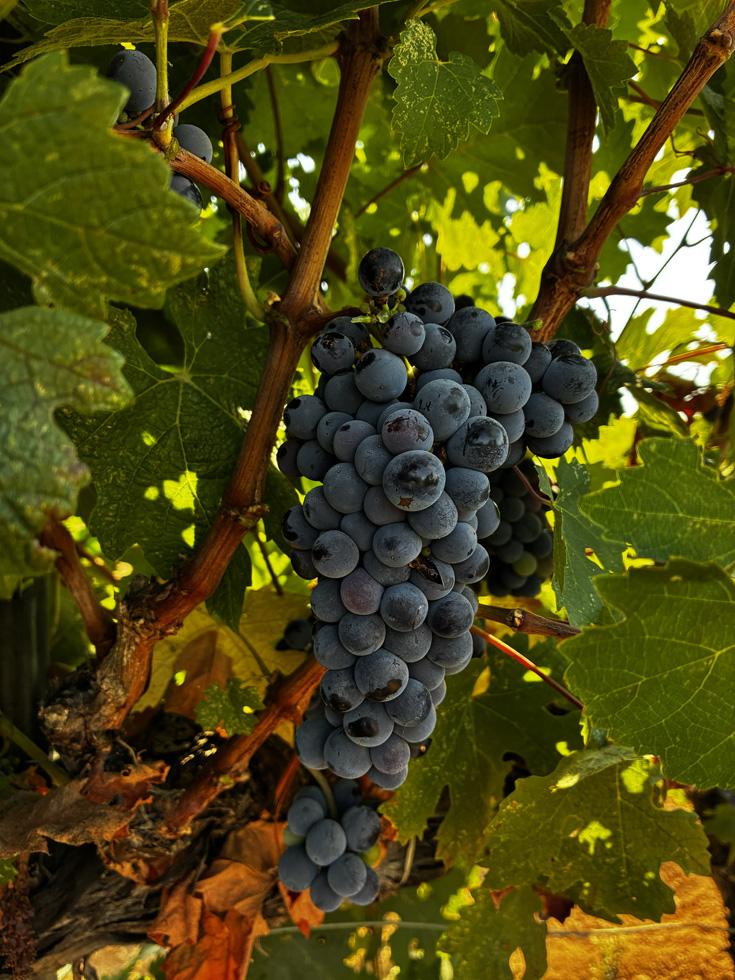
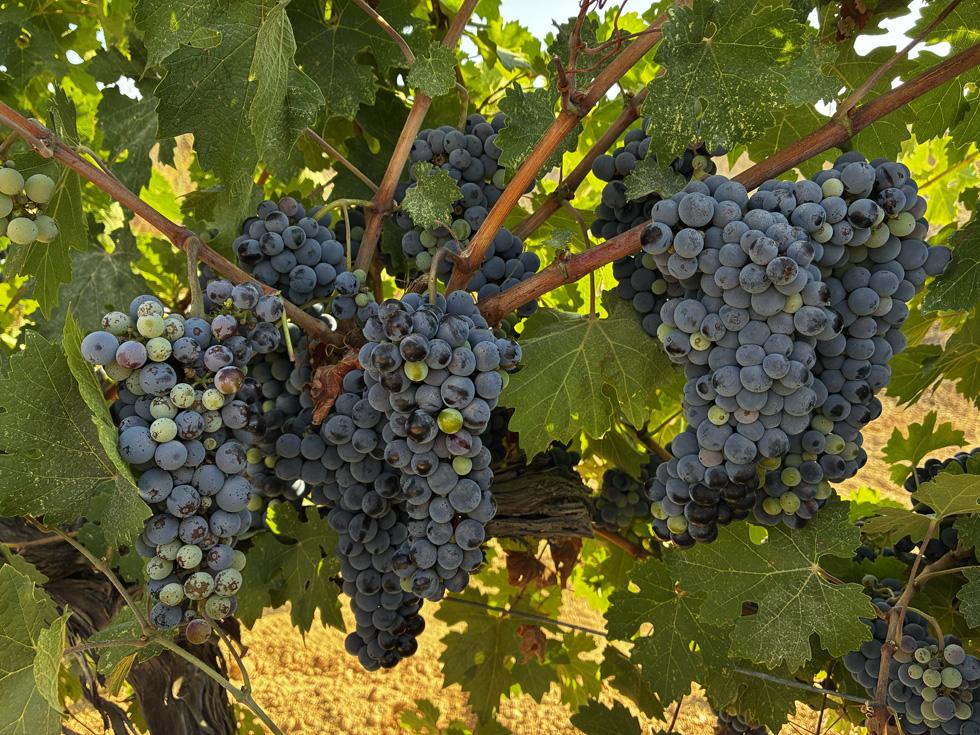
The clusters and berries are small in size. Cabernet Sauvignon produces wines with a very interesting tannic structure and intense color when at optimal ripeness. They typically have great aging potential and adapt well to oak aging. The vegetal aromas of this variety evolve into much more pleasant and complex aromas when the ripeness level is satisfactory. On the other hand, if vinified alone, Cabernet Sauvignon lacks body and roundness.
Agronomic characteristics
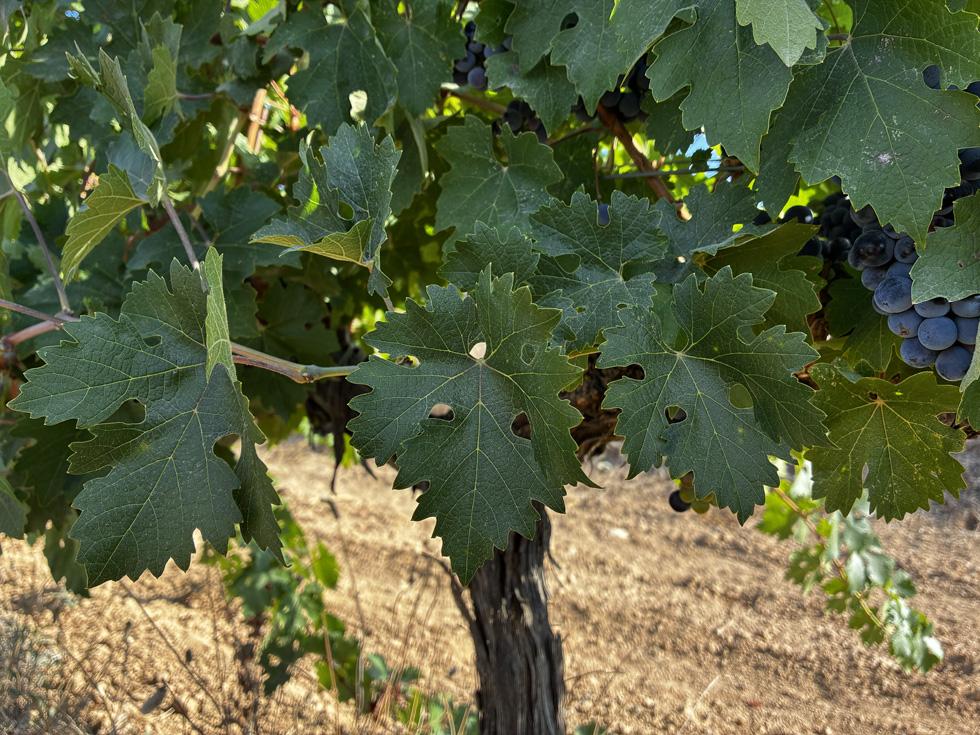
- Cabernet Sauvignon is a vigorous, late-budburst variety that, in
conditions of good fertility, develops large-diameter and very
long shoots, with elongated internodes and tendrils that lignify.
- It requires a good trellising system, and pruning—which can be short or long—is relatively
slow.
- Large pruning wounds should be avoided.
- The removal of the canes, which are hard, also requires a significant amount of
labor time.
- Cabernet Sauvignon usually yields the best results in gravelly,
well-drained, rather acidic, and well-exposed soils.
- This variety can be prone to rachis desiccation (bunch stem necrosis), a risk that
increases with the use of certain rootstocks, such as SO4.
If you are interested in a specific clone or rootstock
Request a quote
"*" indicates required fields