
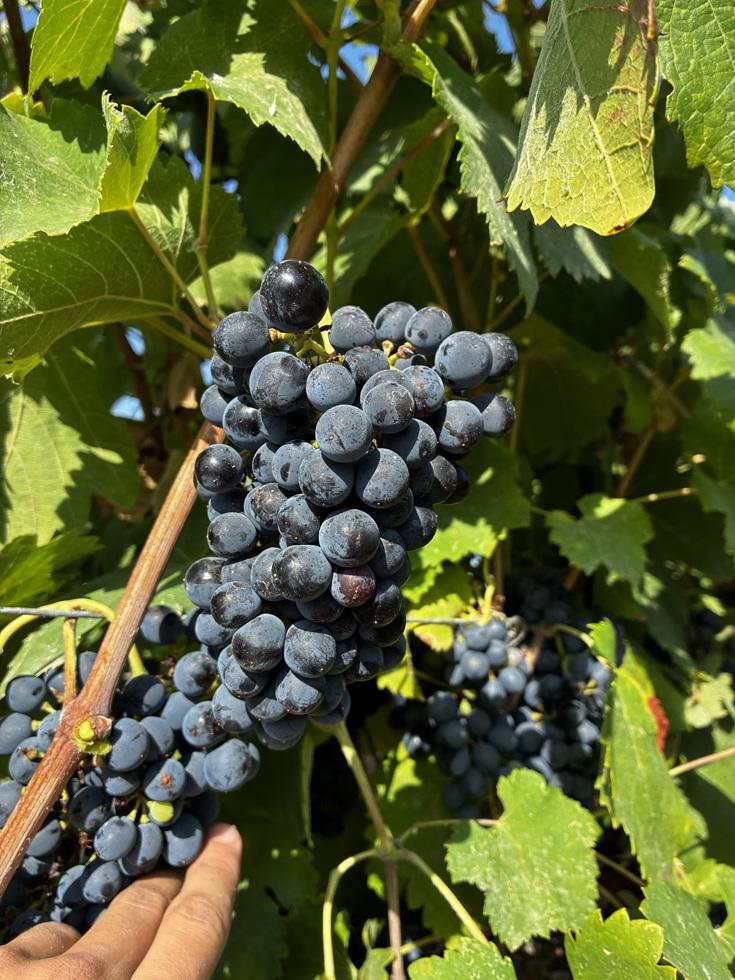
Syrah
Black grape variety
Origin
In all likelihood, this variety originates from the northern part of the Côtes du Rhône or Dauphiné. According to published genetic analyses, it is the result of a cross between Mondeuse blanche and Dureza.
Synonyms
In France, this variety may officially be referred to as “Shiraz” or “Serine” for propagation material. Syrah may officially be referred to as “Shiraz” in Germany, Cyprus, Italy, and Malta.
Phenology
- Budburst period: 7 days after the Chasselas variety.
- Ripening period: 2nd period, 2 and a half weeks after the Chasselas variety.
Technological potential
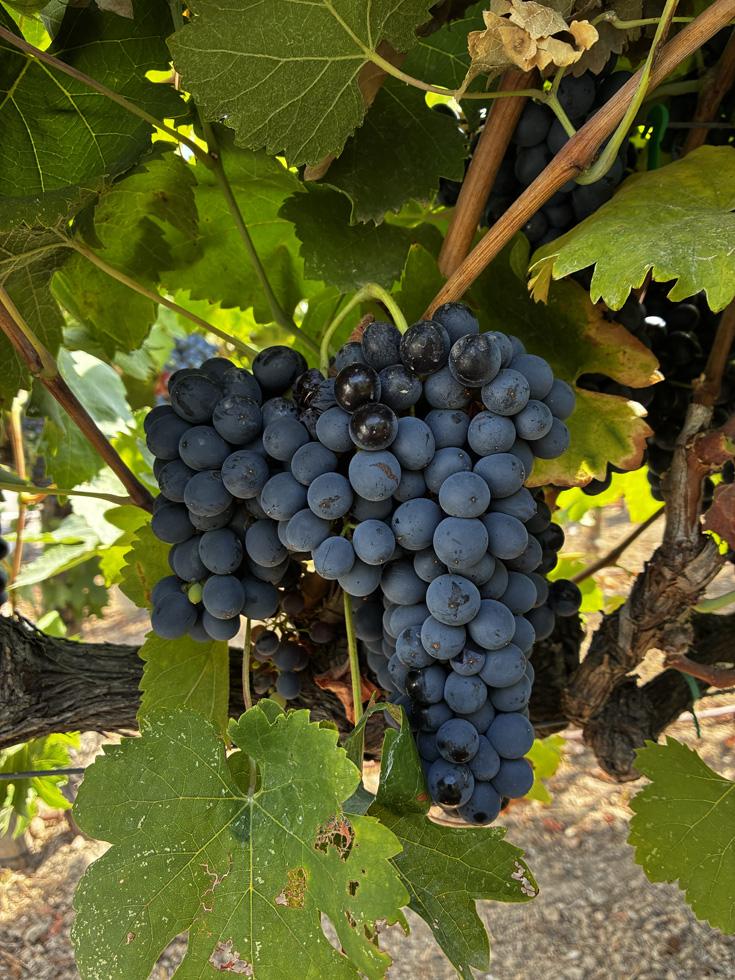
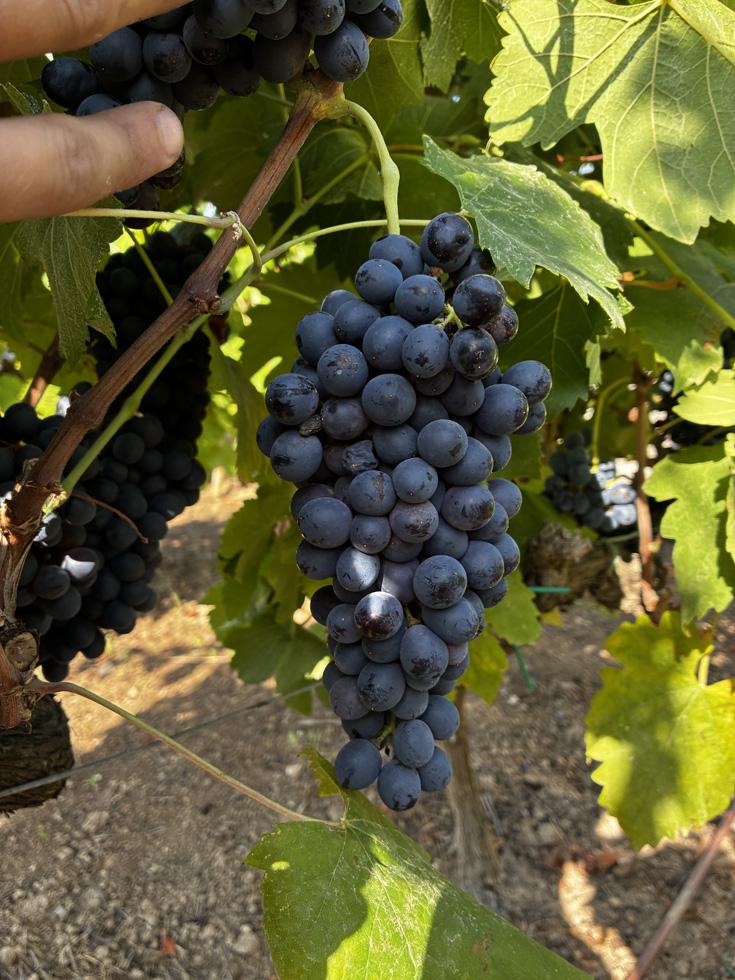
The bunches are small to medium-sized, and the berries are small. Syrah yields red wines with optimal alcohol content, suitable for aging, and of excellent quality. Generally, these wines tend to exhibit an intense color (bluish), are very aromatic, refined, and complex (spices, violet, olive, leather-animal, etc.), tannic, structured, and low in acidity (pH sometimes quite high, especially in schist soils). Syrah also allows for the production of very fruity and interesting rosé wines.
Agronomic characteristics
- This variety, which produces long shoots that are fragile in spring winds, must be carefully trellised.
- Short pruning is sufficient in most cases, especially in southern regions.
- Syrah is a variety highly sensitive to chlorosis, making it unsuitable for soils with high active lime content. Therefore, grafting it onto 110 R should be avoided.
- This variety ripens quickly, resulting in a relatively short veraison-ripening period.
- The optimal harvest period is quite brief and must be assessed considering not only sugar content and acidity, but also berry weight, the condition of the bunches, and berry tasting.
If you are interested in a specific clone or rootstock
Request a quote
"*" indicates required fields